

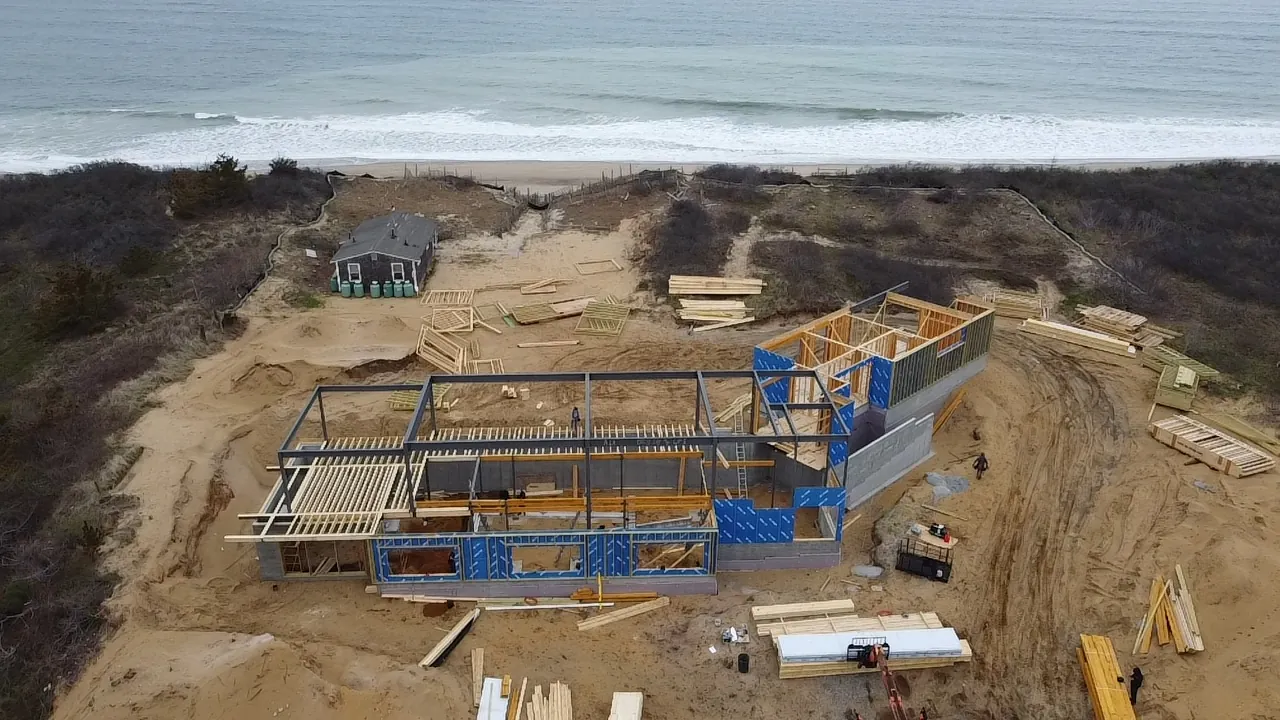
Building on Cape Cod: The Permits and Reviews Behind a New Home
A new home on Cape Cod usually needs more than a building permit. Depending on the lot, the town board of health, the conservation commission and sometimes a historic district commission review the plans before construction starts. Here is the order we see most often, and what each review looks at.
1. The building permit
Every new home needs a building permit from the town building department. The application includes the construction drawings, a certified plot plan showing setbacks, and the energy code documentation. The building commissioner checks the plans against the Massachusetts State Building Code, and inspections follow at the foundation, framing, rough-in and final stages.
2. Septic and the board of health
Most Cape Cod homes are not on town sewer. Septic systems in Massachusetts are designed and approved under Title 5 of the State Environmental Code, and the town board of health reviews the design before the building permit is issued. The number of bedrooms you can build is tied to the septic design, so we look at septic capacity at the very first site walk.
3. The conservation commission
Under the Massachusetts Wetlands Protection Act, work within 100 feet of a wetland, a coastal bank or a pond usually needs a filing with the town conservation commission. Many Cape lots fall inside that buffer. Depending on the work, the filing can be a Request for Determination or a Notice of Intent with a public hearing, which adds weeks to the schedule.
4. Flood zones
Lots near the water often sit in a FEMA flood zone. That changes the foundation design, the height of the first floor and the materials below it, and it affects your insurance. We read the flood map before pricing anything below the first floor.
5. Historic districts
Several Cape towns along Route 6A are part of the Old King’s Highway Regional Historic District. Exterior changes visible from a public way, including new homes, need a certificate from the local district committee. Roof pitch, windows, siding and even paint colors can be reviewed.
What this means for your schedule
Permitting often runs 6 to 12 weeks for a new home, longer with a conservation hearing or a historic review. We include each filing and its expected timeline in your estimate, so the schedule you sign already accounts for it. See how we handle it on our custom homes page.
Rules and thresholds vary by town and change over time. Confirm the requirements for your lot with the town before you buy or design.